
Inbound vs outbound
Separate bundled UCaaS from metered SIP
The calculator models seat subscriptions, local inbound, outbound, toll-free, SIP channels, numbers, and native AI usage.
Independent VoIP readiness lab
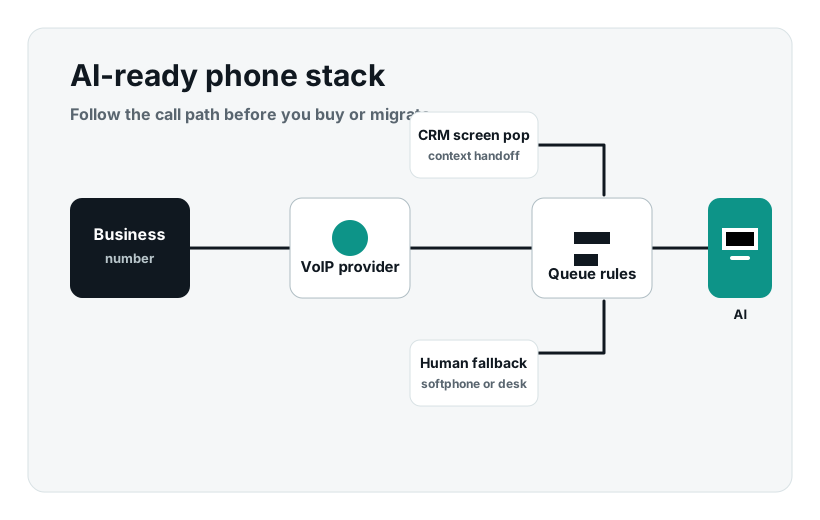
Compare the deployment layer: number control, call forwarding, SIP, overflow, queue routing, CRM handoff, call quality, and failover.
Audit workspace
Strong native AI Receptionist plus mature business phone routing.
Readiness checks
Network and SIP signals
Evidence note
Good fit when teams already use departments, locations, business hours, and overflow rules inside RingCentral.
SIP path
Best reviewed as a UCaaS-native path first; third-party AI layering should verify forwarding, SIP, and account-level routing constraints.
Cost and feature lab
Updated 2026-06-17. This matrix is designed for AI phone deployment decisions: inbound queue handling, outbound/dialer fit, recording, softphone/hardphone support, CRM screen pop, bot handoff, and network/PoP transparency.
Inbound vs outbound
The calculator models seat subscriptions, local inbound, outbound, toll-free, SIP channels, numbers, and native AI usage.

Dialer and queues
Queue behavior, recording, dialer fit, softphone/hardphone support, screen pop, and bot handoff are tracked provider by provider.

Network / PoPs
SIP/carrier providers get PoP and edge notes. UCaaS providers get network-transparency and plan-lift warnings.

Implementation readiness
Use the audit to identify gaps around bot handoff, call recording, queue routing, fallback paths, and caller experience before you commit to a provider.
Decision support
Provider rankings help with shortlists. AI answering needs another layer of diligence: how calls move, where the AI sits, how humans take over, and what happens when the route fails.
Standard provider rankings
They help buyers shortlist vendors, but they rarely say whether a current phone stack can support an AI receptionist without operational friction.
Provider pages that show AI receptionist fit, routing flexibility, SIP or forwarding paths, porting risk, and workflow handoff risk.Connection speed tests
They measure network quality, but stop before practical deployment questions like who owns the number, what forwards where, and where AI can sit in the call flow.
A readiness audit that asks about carrier ownership, call flow, business hours, overflow, recordings, consent, CRM handoff, and failover.AI receptionist product pages
Vendor pages sell their own embedded AI path and often avoid neutral tradeoffs versus layering independent voice agents on top of the phone system.
Side-by-side pages explaining native AI, call forwarding, SIP trunking, and external voice-agent deployment paths.Telecom implementation docs
Useful but fragmented. SMB buyers do not know which doc matters for their AI answering goal.
Plain-English implementation checklists that connect technical requirements to a business phone decision.Provider directory
Each provider page links to official source material and applies the same readiness checks for routing, SIP or forwarding, porting, integrations, recording, queues, and AI handoff.
UCaaS + native AI receptionist
Multi-location businesses that want AI answering inside an established UCaaS stack.
UCaaS + AI receptionist
SMBs that want a broad phone, SMS, video, and support stack with hands-on support.
AI-native communications
Teams that want AI-first calling, meetings, contact center, and coaching in one workspace.
App-first SMB phone + AI agent
Small teams that want simple shared numbers, texts, and AI answering without enterprise PBX complexity.
UCaaS phone inside Zoom Workplace
Teams that want phone, meetings, SMS, fax, and collaboration in a familiar workspace.
Workspace phone add-on
Google Workspace teams with light call volume and straightforward phone needs.
Small business VoIP
Traditional small businesses that want a reliable phone system without enterprise complexity.
Virtual phone system
Solo owners and very small teams that need business numbers, extensions, texting, and mobile/desktop apps.
Sales/support phone system
Customer-facing teams that care about CRM workflow, analytics, and operational phone management.
CPaaS + Elastic SIP Trunking
Teams building custom SIP, PSTN, IVR, and programmable voice paths.
Carrier + SIP + voice APIs
Technical teams that want carrier-grade SIP, voice APIs, and flexible pricing/control.
UCaaS + contact center
Companies that need business phone, contact-center adjacency, and international/global calling coverage.
UCaaS + APIs + contact center
Businesses that may need both packaged phone service and communications APIs.
Popular decisions
These pages focus on the decisions people make when switching phone systems or deciding whether to layer AI answering over what they already use.
Comparison
Should we choose an embedded AI receptionist inside RingCentral or an AI-native communications stack like Dialpad?
Read comparisonComparison
Which business phone system is safer before adding 24/7 AI call answering?
Read comparisonComparison
Is a modern app-first phone system better than Google Voice before adding AI answering?
Read comparisonComparison
Which cloud phone system is a better base before AI receptionist routing?
Read comparisonComparison
Which small business phone tool gives more room to grow into AI answering?
Read comparisonComparison
Which SIP/CPaaS provider is better when the goal is custom AI voice infrastructure?
Read comparisonComparison
Which phone system is better before adding AI call QA, summaries, or external AI receptionists?
Read comparisonComparison
Which mature communications suite gives better room for AI call routing and contact-center evolution?
Read comparisonImplementation path
AI answering works best when the phone layer is understood first. Start with the current provider, model the monthly cost, verify the call path, then decide whether native AI, forwarding, or SIP is the safest route.
Evidence and references
Source links stay visible so buyers can verify pricing, feature availability, queue behavior, hardware support, network claims, and product limitations with the vendor.
Competitor directory
Strong affiliate-style comparison surface, but primarily provider selection rather than AI-readiness implementation diagnosis.
Open sourceCompetitor directory
Large provider comparison catalog built around price, features, reviews, reliability, and support.
Open sourceProvider diagnostic tool
Network readiness matters, but buyers also need to know whether call routing, forwarding, and AI handoff are workable.
Open sourceProvider diagnostic tool
VoIP testing content focuses on connection quality. It rarely audits routing, SIP, forwarding, number ownership, and AI handoff.
Open sourceProvider diagnostic tool
Simulated call quality tools validate demand for technical diagnostics around voice deployments.
Open sourceIndependent technical tool
More technical tests include jitter, packet loss, MOS, SIP ALG, and capacity, which should inform readiness scoring.
Open sourceSearch quality guidance
Useful comparison pages should provide original tools, clear methodology, and evidence a buyer can verify.
Open sourceSearch policy
Public comparison content should help readers make decisions, cite sources clearly, and put reader utility ahead of shortcuts.
Open sourceFAQ
AI-ready VoIP means the phone system has enough number control, call routing, forwarding, recording policy, quality, and fallback behavior to support an AI receptionist without breaking normal business calls.
Native AI is often faster when the provider already controls the number and routing rules. An external AI receptionist is usually better when you need custom scripts, cross-system handoff, or SIP-level control.
Verify who owns the number, how porting works, whether forwarding or SIP handoff is supported, how after-hours routing behaves, and what happens when the AI path is busy, offline, or unanswered.